How to Build Healthy Meals for Insulin Resistance
Aug 13, 2026How to Build Healthy Meals for Insulin Resistance
A simple, flexible way to build balanced meals that support steadier blood sugar without rules, restriction, or shame.
If you’ve been told to “eat better” for insulin resistance, you may have been left wondering what that actually means at mealtime.
Do you need to cut out carbs? Eat perfectly? Track every bite? Avoid every food you enjoy?
No.
Building healthy meals for insulin resistance is less about restriction and more about balance. The goal is to create meals that digest more steadily, keep you satisfied longer, and support your body’s ability to manage blood sugar.
This can be simple. It can be flexible. And it can still include foods you love.
What insulin resistance means at mealtime
Insulin is a hormone that helps move glucose, or sugar, from your bloodstream into your cells for energy. With insulin resistance, your cells do not respond to insulin as easily, so your body may need to produce more insulin to keep blood sugar in range.
Food is only one piece of the picture. Sleep, stress, movement, hormones, genetics, medications, and medical conditions can all play a role.
That means this is not about blaming yourself for what you eat. It is about learning how different meal combinations can support steadier energy and blood sugar.
The simple plate formula
A helpful insulin-resistance-friendly meal usually includes four parts:
- Protein
- Fiber-rich carbohydrates
- Non-starchy vegetables or fruit
- Healthy fats
You do not need to measure everything perfectly. Think of this as a flexible framework, not a strict rule.
A simple plate might look like this:
- Half the plate: non-starchy vegetables
- One quarter of the plate: protein
- One quarter of the plate: fiber-rich carbohydrates
- Add: a small amount of healthy fat and flavor
This combination helps slow digestion, reduce sharp blood sugar spikes, and keep meals more satisfying.
Start with protein
Protein helps steady the meal. It supports fullness, helps preserve muscle, and can make carbohydrates easier for your body to handle when eaten together.
Good protein options include:
- Eggs
- Greek yogurt or cottage cheese
- Chicken, turkey, fish, or lean beef
- Tofu, tempeh, or edamame
- Beans and lentils
- Tuna or salmon
- Protein-rich smoothies
You do not need a perfect protein source at every meal. Start with what is realistic.
For breakfast, that might mean adding eggs to toast or stirring Greek yogurt into a smoothie.
For lunch, it might mean adding chicken, tuna, tofu, or beans to a salad or grain bowl.
For dinner, it might mean building the meal around salmon, turkey meatballs, lentils, or a tofu stir-fry.
Choose carbohydrates with fiber
Carbohydrates are not “bad” for insulin resistance. Your body uses carbohydrates for energy. The key is choosing them thoughtfully and pairing them well.
Fiber-rich carbs digest more slowly than refined carbs and tend to be more filling.
Examples include:
- Oats
- Brown rice
- Quinoa
- Farro
- Barley
- Beans
- Lentils
- Sweet potatoes
- Winter squash
- Whole grain bread or tortillas
- Berries
- Apples
- Pears
You can still enjoy pasta, bread, rice, and potatoes. The difference is in the portion, the type, and what you eat with them.
For example, pasta with protein, vegetables, and olive oil will usually feel different in your body than pasta eaten alone. A slice of toast with eggs and avocado will usually be more satisfying than toast by itself.
Add color with vegetables and fruit
Non-starchy vegetables bring fiber, volume, nutrients, and texture to a meal. They help make the plate feel full without requiring restriction.
Helpful options include:
- Leafy greens
- Broccoli
- Cauliflower
- Zucchini
- Peppers
- Mushrooms
- Green beans
- Cabbage
- Asparagus
- Cucumbers
- Tomatoes
- Carrots
Fruit can also fit well, especially when paired with protein or fat.
Try berries with Greek yogurt, apple slices with peanut butter, or a pear with cottage cheese.
The goal is not to force vegetables into every meal in a way you dislike. The goal is to find simple ways to add color that you will actually repeat.
Include fat for satisfaction
Healthy fats help meals taste better and feel more satisfying. They can also slow digestion when paired with carbohydrates.
Examples include:
- Avocado
- Olive oil
- Nuts
- Seeds
- Nut butters
- Tahini
- Olives
- Salmon or sardines
A little can go a long way. Add avocado to a grain bowl, drizzle olive oil on roasted vegetables, sprinkle seeds onto yogurt, or use peanut butter with fruit.
Fat is not something to fear. It is part of a balanced meal.
What this looks like in real life
Here are a few simple meal ideas using the plate formula.
Breakfast
- Greek yogurt with berries, chia seeds, and a small handful of granola
- Eggs with whole grain toast, avocado, and fruit
- Oatmeal with protein powder or Greek yogurt, peanut butter, and berries
- Breakfast tacos with eggs, black beans, salsa, and avocado
Lunch
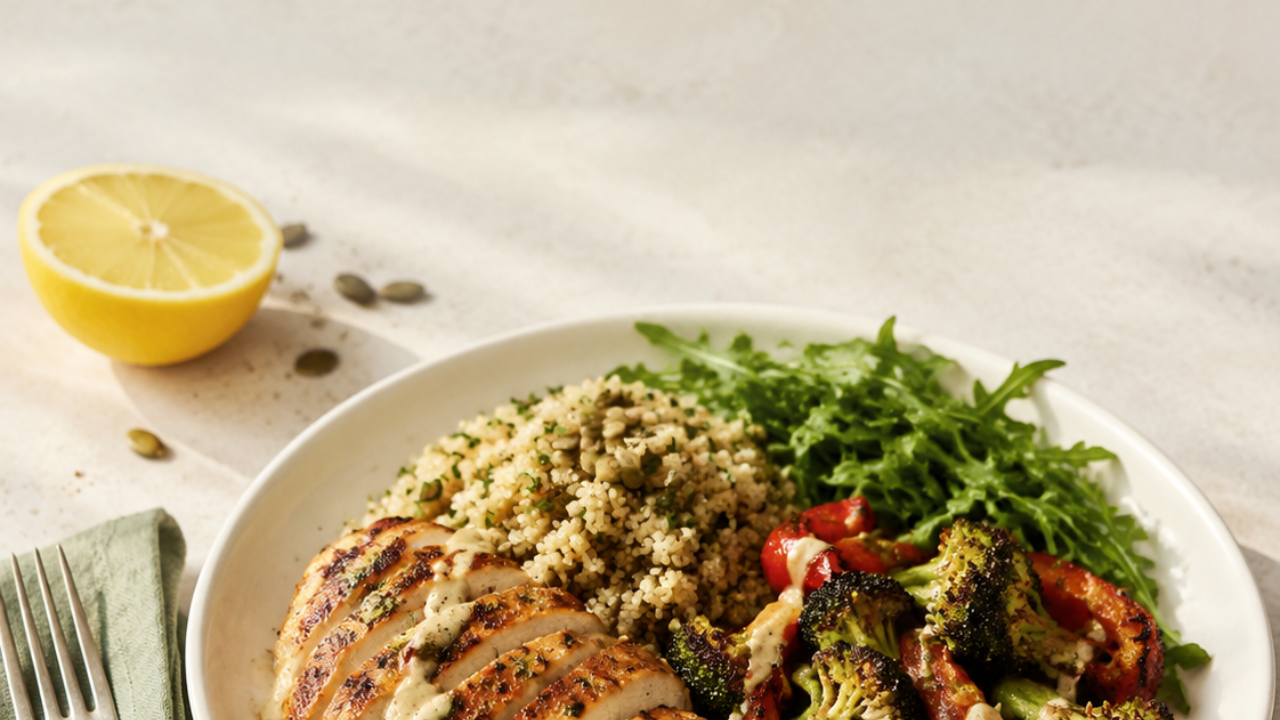
- Chicken salad bowl with greens, quinoa, roasted vegetables, and olive oil dressing
- Turkey and avocado wrap with raw vegetables and hummus
- Lentil soup with a side salad and whole grain toast
- Tuna bowl with brown rice, cucumbers, greens, and sesame dressing
Dinner
- Salmon with roasted broccoli, sweet potato, and olive oil
- Turkey meatballs with pasta, marinara, and a large side salad
- Tofu stir-fry with vegetables, edamame, and brown rice
- Bean chili topped with Greek yogurt, avocado, and herbs
Snacks
- Apple with peanut butter
- Cottage cheese with berries
- Hummus with vegetables and whole grain crackers
- Boiled eggs with fruit
- Greek yogurt with cinnamon and walnuts
None of these meals are perfect. They are balanced, realistic, and supportive.
3 easy meal ideas that use the plate formula
The goal is not to cook a separate “insulin resistance meal” for yourself. It is to build a balanced plate from foods your family already eats, then make small swaps that help you feel full, steady, and satisfied.
Use these meals as a starting point. You can adjust the portions, seasonings, and sides to fit your home.
Sheet Pan Chicken Fajita Bowls
A simple dinner with protein, colorful vegetables, fiber-rich carbs, and toppings everyone can choose for themselves.
Ingredients
- 1 to 11⁄2 pounds chicken breast or thighs, sliced
- 3 bell peppers, sliced
- 1 onion, sliced
- 1 tablespoon olive oil
- 1 tablespoon taco seasoning
- 2 cups cooked brown rice, quinoa, or cauliflower rice
- 1 can black beans, rinsed and drained
- 1 avocado, sliced
- Salsa, plain Greek yogurt, shredded cheese, or cilantro for topping
Directions
- Heat the oven to 425°F.
- Add chicken, peppers, and onion to a sheet pan. Toss with olive oil and taco seasoning.
- Bake for 20 to 25 minutes, or until the chicken is cooked through.
- Build each bowl with rice or quinoa, black beans, chicken, vegetables, and toppings.
- For a lighter carb option, use half rice and half cauliflower rice.
Turkey Burger Plates with Sweet Potato Fries
This is a balanced version of burger night that still feels familiar and satisfying.
Ingredients
- 1 pound ground turkey
- 1 egg
- 1⁄2 cup oats or whole wheat breadcrumbs
- 1 teaspoon garlic powder
- 1 teaspoon onion powder
- Salt and pepper
- 2 medium sweet potatoes, cut into fries
- 1 tablespoon olive oil
- Salad greens or raw veggie sticks
- Pickles, tomato, avocado, mustard, or your favorite burger toppings
Directions
- Heat the oven to 425°F.
- Toss sweet potato fries with olive oil, salt, and pepper. Spread on a baking sheet.
- Bake for 25 to 30 minutes, flipping halfway through.
- Mix turkey, egg, oats or breadcrumbs, and seasonings. Form into patties.
- Cook patties in a skillet over medium heat for 5 to 6 minutes per side, or until cooked through.
- Serve with salad greens or raw veggies, sweet potato fries, and toppings.
- Add a whole grain bun if you want one, or serve the burger over greens.
Creamy Greek Yogurt Chicken Pasta
A quick comfort meal with protein, vegetables, and pasta in a way that supports a balanced plate.
Ingredients
- 8 ounces whole wheat pasta, chickpea pasta, or regular pasta
- 2 cups cooked chicken, shredded or diced
- 2 cups broccoli florets
- 1⁄2 cup plain Greek yogurt
- 1⁄4 cup grated parmesan cheese
- 1 tablespoon olive oil
- 1 teaspoon garlic powder
- Salt and pepper
- Lemon juice, to taste
Directions
- Cook pasta according to package directions. Add broccoli during the last 2 to 3 minutes of cooking.
- Save 1⁄2 cup pasta water, then drain.
- Add pasta, broccoli, chicken, olive oil, Greek yogurt, parmesan, garlic powder, salt, and pepper back to the pot.
- Stir gently, adding a splash of pasta water until creamy.
- Finish with lemon juice if desired.
- Serve with a side salad or extra vegetables if you want more volume.
These meals are not about perfection. They are about building plates that work in real life, with enough flexibility for busy nights, picky eaters, and changing schedules.
If you want more support turning this plate formula into meals your family will actually eat, Kitchen Sessions walks you through simple planning, balanced meal ideas, and practical kitchen rhythms that make nourishing yourself feel less overwhelming.
A few gentle habits that can help
Once your meals are balanced, small habits can make them even more supportive.
- Eat regularly enough that you are not arriving at meals overly hungry.
- Pair carbohydrates with protein, fiber, and fat when possible.
- Add vegetables in ways that feel easy, not forced.
- Take a short walk after meals if it feels good in your body.
- Notice how meals affect your energy, hunger, cravings, and mood.
- Keep convenience foods available for busy days.
You do not need to do all of this at once. Choose one small shift and practice it until it feels normal.
What to avoid
It can be tempting to respond to insulin resistance with strict food rules. But extreme restriction often backfires. It can increase stress, make meals harder to sustain, and create a cycle of guilt around food.
Try not to turn this into an all-or-nothing plan.
You can eat carbohydrates.
You can eat out.
You can enjoy dessert.
You can have a meal that does not follow the formula and still take care of your body at the next meal.
Consistency matters more than perfection.
A simple way to build your next meal
If you are standing in your kitchen and unsure where to start, ask yourself:
- What is my protein?
- What is my fiber-rich carbohydrate?
- What color can I add?
- What fat or flavor will make this satisfying?
That might become eggs, toast, berries, and avocado.
Or chicken, rice, roasted vegetables, and olive oil.
Or lentils, greens, sweet potato, and tahini.
The formula is simple on purpose. The easier it is to repeat, the more useful it becomes.
A note on medical care
This article is for general education and is not medical advice. Insulin resistance can be connected to conditions such as prediabetes, type 2 diabetes, PCOS, metabolic syndrome, and other health concerns. Your needs may also vary depending on medications, lab results, medical history, pregnancy, eating disorder history, and activity level.
If you have been diagnosed with insulin resistance or are concerned about your blood sugar, work with your healthcare provider or a registered dietitian for personalized guidance.
Support that feels practical
Healthy meals for insulin resistance do not need to be complicated. Start with protein, add fiber-rich carbohydrates, bring in color, and include fat for satisfaction.
That is enough to begin.
If you want more support turning this into meals you can actually cook and repeat, Kitchen Sessions from Nourished Well offers practical, shame-free help for building confidence in the kitchen one meal at a time.
Stay connected with news and updates!
Join our mailing list to receive the latest news and updates from our team.
Don't worry, your information will not be shared.
We hate SPAM. We will never sell your information, for any reason.